Blog
Does Jelly Force Work? The Label Claims, Set Beside the Evidence
Quick answer
Does Jelly Force work? No study of the finished Jelly Force gummy has been published, so nobody can say that it works. The bottle makes one claim, that it may support vitality, drive and performance, and that support wording is legal without proof of a result. The research that exists covers single ingredients, not this 82 mg blend, so the evidence has to be checked ingredient by ingredient.
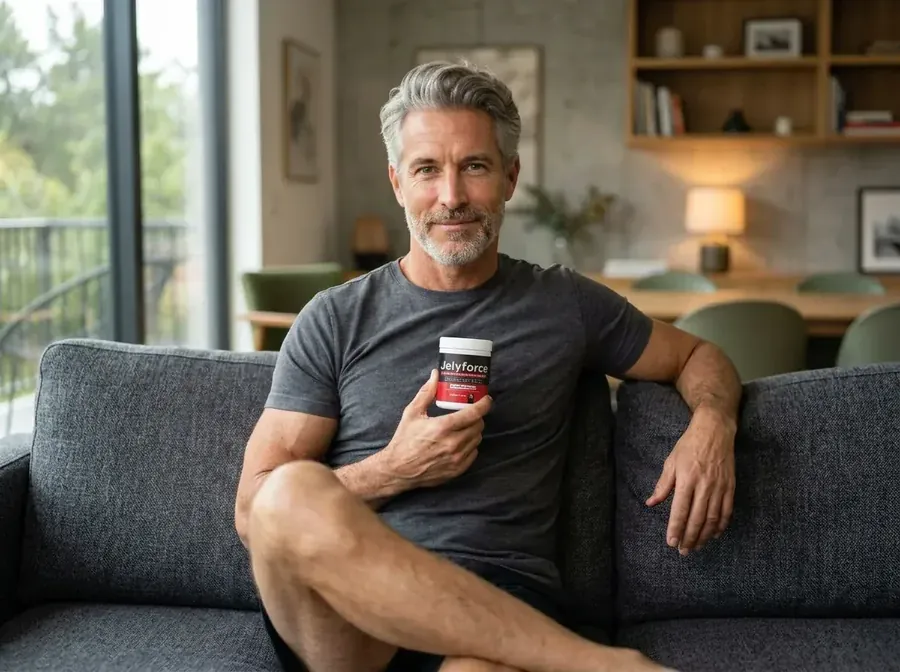
The bottle prints three words and an asterisk
Every claim on this bottle is written in the one grammar that a supplement is allowed to use.
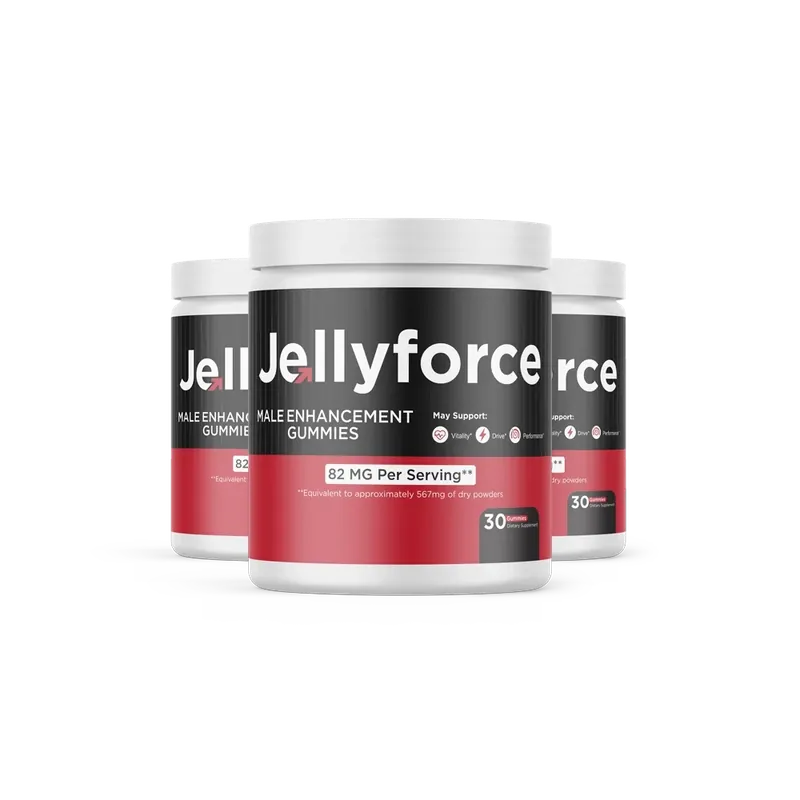
The label carries one claim line: "May support: Vitality*, Drive*, Performance*". Each word takes an asterisk, and the asterisk leads to the FDA disclaimer.
Three words is not much to argue with, which is the point. Each one names a broad state rather than a measurable outcome.
The bottle also prints "82 mg per serving" and the dry-powder equivalence line. Those are the only numbers attached to any claim on the package.
- May support vitality
- May support drive
- May support performance
- Dietary supplement
- Produced in a GMP facility
What a structure-function claim is
US law splits what a supplement may say into a few narrow categories. The useful one here is the structure-function claim.
It describes an effect on the normal structure or function of the body. Supporting stamina, supporting circulation and supporting a healthy immune response all fit that shape.
What it may not do is name a disease. "Treats erectile dysfunction" would be a drug claim, and a drug claim needs approval that no supplement in this category holds.
- A structure-function claim needs no pre-approval before it appears on a label.
- The maker is responsible for holding evidence that the claim is truthful and not misleading.
- The maker must notify FDA that it is making the claim.
- The label must carry the disclaimer that the statement has not been evaluated by FDA.
- None of those steps requires a published trial on the finished product.
That last line is the one to keep. A legal claim and a proven claim are different things, and the label format cannot tell them apart.
Why "may support" is the safest phrase on a label
"May" removes certainty. "Support" removes the outcome. Together they describe a direction of travel without committing to arrival.
A reader cannot falsify a support claim, because nothing measurable was promised. That is what makes the phrase durable and what makes it weak as information.
| Wording | What it commits to | How to read it |
|---|---|---|
| May support vitality | Nothing measurable | A direction, not an effect |
| Supports healthy circulation | A function, not a result | Legal as long as no condition is named |
| Improves stamina by a set amount | A measurable outcome | Would need substantiation a reader could check |
| Treats or prevents a condition | A drug claim | Not permitted on a supplement label |
The bottle stays in the first row. The sales page moves toward the second, which is where the reading gets more work.
The four sales-page lines, and what each would need
| The claim, as written | What would have to be shown | What is published |
|---|---|---|
| "naturally and effectively support sexual health" | Evidence that the finished formula changes a measure of sexual health | No study on this formula is published, and a review of maca found the evidence too limited to judge (Shin et al., 2010) |
| "increase vitality and energy to tackle daily challenges" | An energy effect at the amounts present | The only stimulant with a number is caffeine, at 5 mg, roughly a twentieth of a cup of coffee |
| "promote healthy blood circulation to support cardiovascular function" | A circulation measure moving at these amounts | L-arginine is the blood-flow ingredient, and published work uses grams a day (NIH ODS) |
| "the natural method to support your stamina health" | Evidence tying the blend to stamina | A U.S. Defense Department review found no strong support for tribulus performance claims (Operation et al., 2024) |
None of the four is illegal. Each one is a function claim with no condition named, and each carries the same disclaimer duty as the bottle.
The gap is not legal, it is evidential. A claim can be lawful while the research behind it is thin, and that is the normal case in this category.
Claim beside evidence, ingredient by ingredient
The claims are about the product. The evidence is about ingredients, one at a time, usually at amounts this blend cannot reach.
| Ingredient | What it is sold for | What published sources say |
|---|---|---|
| Maca extract | Sexual function support | A systematic review found the evidence too limited to judge (Shin et al., 2010) |
| L-Arginine | Blood flow and circulation | Used by the body to make nitric oxide. Published work uses grams a day (NIH ODS) |
| Tribulus terrestris | Drive and performance | No strong evidence for sexual or athletic performance claims (Operation et al., 2024) |
| Ashwagandha | Stress and stamina | Data run two to four months, with rare liver injury reports and a possible thyroid medicine interaction (NCCIH, 2023) |
| Green tea extract | Energy and metabolism | Concentrated extracts linked to rare liver injury, and an interaction with the heart medicine nadolol (NCCIH, 2025) |
| Caffeine | Energy | 5 mg printed. FDA's general figure for healthy adults is about 400 mg a day (FDA, 2024) |
| Muira puama, catuaba, horny goat weed | Libido and vitality | Little human research and no federal fact sheet, so the evidence is described as limited and nothing is cited |
Three of the nine have no citable source at all. That is not a hidden fact, it is what the literature looks like for muira puama, catuaba and horny goat weed.
The amount problem sits over all of it. The blend is 82 mg, nine ingredients share it, and eight amounts are not published. The blend guide explains what can still be worked out.
The circulation line is the one to read twice
One sales-page line reads "promote healthy blood circulation to support cardiovascular function". It names no condition, so it stays a function claim.
It still sits closer to medicine than the other three. Circulation and cardiovascular function are the language of conditions that need a doctor.
Two ingredients here have real interaction notes. Green tea interacts with the heart medicine nadolol (NCCIH, 2025), and ashwagandha may interact with thyroid medicine (NCCIH, 2023).
The side effects page lists the medicines worth clearing with a doctor before the first gummy.
A four-question test for any support claim
Find the verb
"Supports", "promotes" and "helps maintain" are function verbs. "Treats", "cures" and "prevents" are drug verbs and should not appear.
Find the amount behind it
Match the claim to a printed number. Here the number is 82 mg for nine ingredients, with 5 mg of caffeine broken out.
Find the source
Look for a named review or a federal fact sheet on the ingredient, and check the amount it used. Grams and milligrams are not interchangeable.
Ask what was studied
An ingredient study is not a product study. If no research covers the finished formula, the claim rests on ingredients alone.
Run those four on any bottle in this category. The claims usually survive question one and rarely survive question two.
Claims this label does not make
- That it treats, cures or prevents any condition.
- That a result arrives on any timeline.
- That a doctor, clinic or laboratory has reviewed the formula.
- That any amount inside the blend matches a studied dose.
- That the product replaces medical advice.
Those absences are worth as much as the printed words. A label that stayed inside the rules is doing the minimum the law asks, and that is the floor rather than a recommendation.
FDA also keeps finding hidden prescription drugs in men's products sold online (FDA, 2026), which is a reason to buy through one authorized route and keep the order traceable.
Support claims: what they can and cannot mean
What is a structure-function claim?
A statement that an ingredient affects the normal structure or function of the body, such as supporting stamina or circulation. It must avoid naming a disease, and it must carry the FDA disclaimer.
Does "may support" mean it works?
No. It states a possible effect and promises nothing. The words are chosen because they stay inside what a supplement is allowed to say without a drug approval.
Why is there an asterisk after each claim?
It points to the required disclaimer. These statements have not been evaluated by the Food and Drug Administration. This product is not intended to diagnose, treat, cure, or prevent any disease. Every claim on the bottle carries that asterisk.
Does FDA approve these claims before they appear?
No. A dietary supplement is not approved the way a drug is. The maker is responsible for holding substantiation and for notifying FDA about the claims it makes.
Which ingredient here has the strongest published support?
None of the nine has support strong enough to carry a benefit claim at the amounts this panel allows. The blend is 82 mg in total, and the cited work uses far larger amounts.
Is "promote healthy blood circulation" a disease claim?
As written it is a function claim, because it names no condition. Circulation and cardiovascular function sit close to disease territory, which is a reason to read that line carefully.
Does the seller's own research count?
No study on this finished formula is published, so there is nothing to weigh. Unpublished research is the same as no research for a reader.
Where can I read the claims in full?
The benefits page prints the bottle claims and the sales-page lines together, and says what each one does not mean.
References
- U.S. Food and Drug Administration (2024). Spilling the Beans: How Much Caffeine is Too Much?.
- U.S. Food and Drug Administration (2026). Tainted Sexual Enhancement Products.
- National Center for Complementary and Integrative Health (2023). Ashwagandha: Usefulness and Safety.
- National Center for Complementary and Integrative Health (2025). Green Tea: Usefulness and Safety.
- NIH Office of Dietary Supplements (accessed 2026). Dietary Supplements for Exercise and Athletic Performance.
- Operation Supplement Safety, U.S. Department of Defense (2024). Tribulus terrestris as an ingredient in dietary supplements.
- Shin BC, Lee MS, Yang EJ, Lim HS, Ernst E (2010). Maca (L. meyenii) for improving sexual function: a systematic review. BMC Complementary and Alternative Medicine 10:44.
The order desk
Buy Jelly Force through this desk
Four pack sizes, 30 gummies to a bottle. The order page carries the current prices and every order is covered for 60 days. Need to ask something first? +1 (302) 200-3480.

Keep reading
Jelly Force Benefits
The three support claims on the bottle, read honestly, plus a plain list of what the gummy does not do.
Read →The labelJelly Force Ingredients
All nine ingredients inside the 82 mg blend, and the four the front graphic leaves out.
Read →GuideReading a proprietary blend
One printed total, nine names, and the four things label order still tells a careful reader.
Read →