Blog
Jelly Force Gummies: What One Gummy Actually Contains
Quick answer
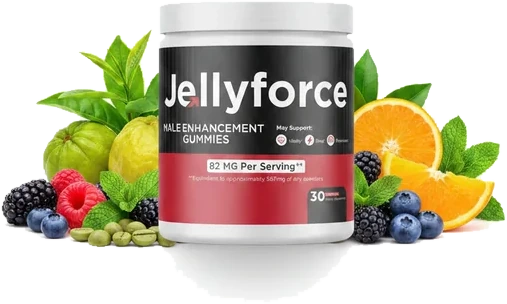
Jelly Force gummies each carry 82 mg of proprietary blend, 3 g of added sugar, 10 calories and 4 mg of sodium. Nine ingredients share the 82 mg, and only caffeine is broken out, at 5 mg. A bottle holds 30 gummies, one a day for 30 days. By weight, the sugar in one gummy outweighs the blend roughly thirty-six times over.
One gummy, four numbers worth writing down
The label prints four amounts and one shared total. This post does the arithmetic the label leaves to you.
Four figures on this panel are printed and certain. Everything else about the contents of a gummy has to be reasoned out or left blank.
- 82 mgProprietary blend
- 3 gAdded sugar
- 10Calories
- 5 mgCaffeine
Those four are the honest starting point for any question about amounts. The blend figure covers nine ingredients at once. The other three describe the sweet that carries them.
Serving size is one gummy and a bottle holds 30, so one bottle covers 30 days at 1 gummy a day.
Everything below follows from those figures. No number in this post is estimated, and the arithmetic is shown so it can be checked against your own bottle.
Where 82 mg goes once caffeine is removed
Caffeine is the only member of the blend with its own figure. Take its 5 mg out of 82 mg and 77 mg remains for the other eight ingredients.
Split evenly, that is a little under 10 mg each. Nothing says the split is even, and the label gives no way to check.
Label order does narrow it. Ingredients inside a blend are listed heaviest first, and caffeine sits fifth of nine.
- Muira puama extract, maca extract, catuaba extract and green tea extract are listed above caffeine, so each holds 5 mg or more.
- Ashwagandha, L-arginine, Tribulus terrestris and horny goat weed extract are listed below it, so each holds 5 mg or less.
- Those bottom four therefore share 20 mg at most, leaving at least 57 mg to the top four.
The proprietary blend guide works through those bounds position by position. The short version: the first name on the list is the only one with real weight behind it.
A bottle and a six-pack, added up
| Printed figure | One gummy | One bottle (30) | Six bottles (180) |
|---|---|---|---|
| Proprietary blend | 82 mg | 2,460 mg | 14,760 mg |
| Added sugar | 3 g | 90 g | 540 g |
| Calories | 10 | 300 | 1,800 |
| Caffeine | 5 mg | 150 mg | 900 mg |
| Sodium | 4 mg | 120 mg | 720 mg |
Multiplying out is the fastest way to see what a routine really delivers. A six-pack is 180 days at one a day, and over those days it supplies under 15 grams of blend in total.
The same 180 days supply 540 g of added sugar and about 1,800 calories from the base.
Those are label figures multiplied, not estimates. The pricing page sets out what each pack holds in days.
The sugar outweighs the blend about thirty-six to one
3 g of sugar is 3,000 mg. The blend is 82 mg. By weight, the sugar in one gummy is roughly thirty-six times the active side of it.
That is not a criticism of the recipe. It is what a chewable is. Sugar syrup and pectin are the reason the piece sets, chews and tastes of anything.
It is worth knowing because the sweet part is the part most buyers notice, and the 82 mg is the part the sales page is selling.
The other ingredients line ranks the base by weight: Corn syrup, cane sugar, water, apple pectin, sorbitol liquid, natural flavors, citric acid, sodium citrate dihydrate. Corn syrup and cane sugar come first, which matches the 3 g on the panel.
567 mg describes what went in
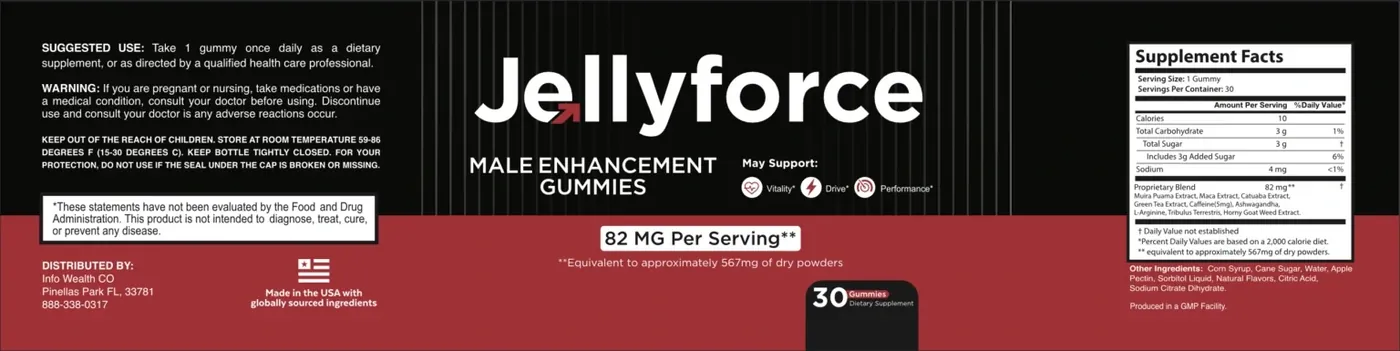
The bottle prints "82 MG Per Serving" and then "equivalent to approximately 567 mg of dry powders".
The second line describes the raw dried plant material behind the extracts, before any of it was concentrated. It is a comparison with the starting material.
What the gummy holds is 82 mg. Reading 567 mg as a dose would inflate the contents of this product by about seven times.
Turning the figure into amounts would need an extract ratio for each extract line, and no ratio is printed. Those are not published.
82 mg next to the amounts research uses
A total only becomes meaningful next to published work. Four comparisons can be made without knowing the split.
L-arginine
The body makes nitric oxide from it, and published work on exercise uses grams a day (NIH ODS). Label order caps it at 5 mg here.
Caffeine
5 mg is printed. FDA's general figure for healthy adults is about 400 mg a day (FDA, 2024), so this is a very small exposure.
Maca
A systematic review found the evidence for sexual function too limited to judge (Shin et al., 2010), which means there is no settled amount to compare against.
Tribulus terrestris
A U.S. Defense Department review found no strong evidence behind claims for sexual or athletic performance (Operation et al., 2024).
Three ingredients have no comparison available at all. Muira puama, catuaba and horny goat weed have little human research and no federal fact sheet, so this post cites nothing for them.
None of the linked work studied this gummy. The ingredients page goes through all nine one at a time.
Five names in the graphic, nine on the panel
The "Inside Jelly Force" graphic names five ingredients: muira puama, maca, catuaba, ashwagandha and L-arginine.
The Supplement Facts panel names nine. Green tea extract, caffeine, Tribulus terrestris and horny goat weed extract appear on the panel and not in the picture.
That matters for two of the four. Green tea extract carries caffeine and catechins, and concentrated extracts have been linked to rare liver injury (NCCIH, 2025).
- Green tea extract, absent from the graphic, present on the panel.
- Caffeine, absent from the graphic, printed at 5 mg on the panel.
- Tribulus terrestris, absent from the graphic.
- Horny goat weed extract, absent from the graphic.
When a graphic and a panel disagree, the panel is the document. A picture is marketing artwork and carries no labeling duty.
The practical rule is to read any ingredient graphic as a partial list until the panel confirms it. Four names missing out of nine is a large gap, and the two that carry cautions are among them.
What the arithmetic cannot settle
Multiplication answers how much material arrives. It cannot answer whether that material does anything.
Ashwagandha adds one more caution worth naming. Data run two to four months, rare liver injury has been reported, and it may interact with thyroid medicine (NCCIH, 2023).
Erection or drive problems can signal heart disease or diabetes, so a doctor comes before arithmetic. For the panel itself, read the Supplement Facts page.
Amounts in one gummy: the questions readers send
How much of each ingredient is in a gummy?
Eight of the nine amounts are not published. The panel prints one total, 82 mg, and breaks out caffeine at 5 mg. Nothing on the label gives the rest of the split.
How much blend does a whole bottle hold?
About 2,460 mg, which is 82 mg multiplied by 30 gummies. Spread across nine ingredients and 30 days, that is a small figure for a month of use.
Is 82 mg a low amount?
It is low next to the amounts in the research this site cites. Work on L-arginine and exercise uses grams a day, and the whole blend here is 82 mg shared nine ways.
How much sugar does a bottle hold?
90 g of added sugar, at 3 g a gummy across 30 gummies. That also comes to about 300 calories per bottle from the gummy base.
How much caffeine is in a gummy?
5 mg, as printed. A cup of coffee holds roughly twenty times that, and FDA's general figure for healthy adults is about 400 mg a day (FDA, 2024).
Does the 567 mg figure mean I get more than 82 mg?
No. It describes the raw dried plant material behind the extracts before extraction. The gummy holds 82 mg of blend, and that is the figure to work from.
Why does the ingredient graphic name five ingredients?
The "Inside Jelly Force" graphic names muira puama, maca, catuaba, ashwagandha and L-arginine. The panel names nine, so green tea extract, caffeine, tribulus and horny goat weed are missing from the picture.
Can I take two gummies to double the amount?
The label directs 1 gummy a day. Doubling also doubles the sugar and the caffeine. Do not go past one a day unless a clinician who knows your history says so.
References
- U.S. Food and Drug Administration (2024). Spilling the Beans: How Much Caffeine is Too Much?.
- National Center for Complementary and Integrative Health (2023). Ashwagandha: Usefulness and Safety.
- National Center for Complementary and Integrative Health (2025). Green Tea: Usefulness and Safety.
- NIH Office of Dietary Supplements (accessed 2026). Dietary Supplements for Exercise and Athletic Performance.
- Operation Supplement Safety, U.S. Department of Defense (2024). Tribulus terrestris as an ingredient in dietary supplements.
- Shin BC, Lee MS, Yang EJ, Lim HS, Ernst E (2010). Maca (L. meyenii) for improving sexual function: a systematic review. BMC Complementary and Alternative Medicine 10:44.
The order desk
Buy Jelly Force through this desk
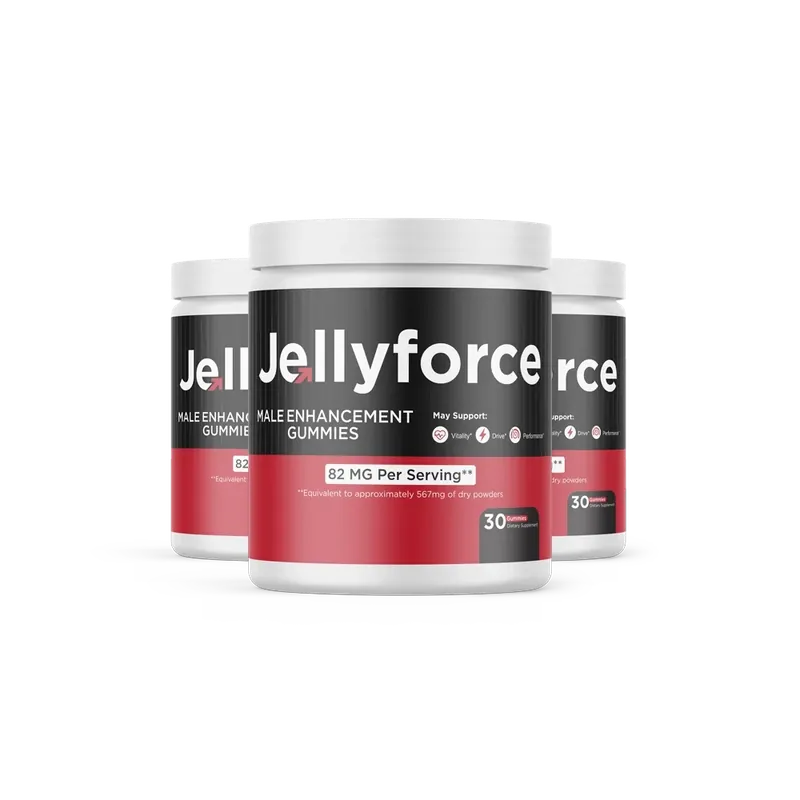
Four pack sizes, 30 gummies to a bottle. The order page carries the current prices and every order is covered for 60 days. Need to ask something first? +1 (302) 200-3480.

Keep reading
Jelly Force Supplement Facts
The whole printed panel: calories, sugar, sodium, the 82 mg blend and the distributor block.
Read →GuideReading a proprietary blend
One printed total, nine names, and the four things label order still tells a careful reader.
Read →The labelJelly Force Ingredients
All nine ingredients inside the 82 mg blend, and the four the front graphic leaves out.
Read →